
The California Public Records Act in Marin County
Public access to agency records in California runs on the California Public Records Act, now recodified in the Government Code. The law presumes that state and local agency records are open to the public unless a specific exemption applies. A county office that holds an agency record has to produce it on request, with limited exceptions for privacy, security, and certain protected categories. Enforcement generally comes through follow-up and, if needed, litigation.
The full statutory text lays out the access rules and the exemptions.
The law itself is on the state's California Public Records Act page.
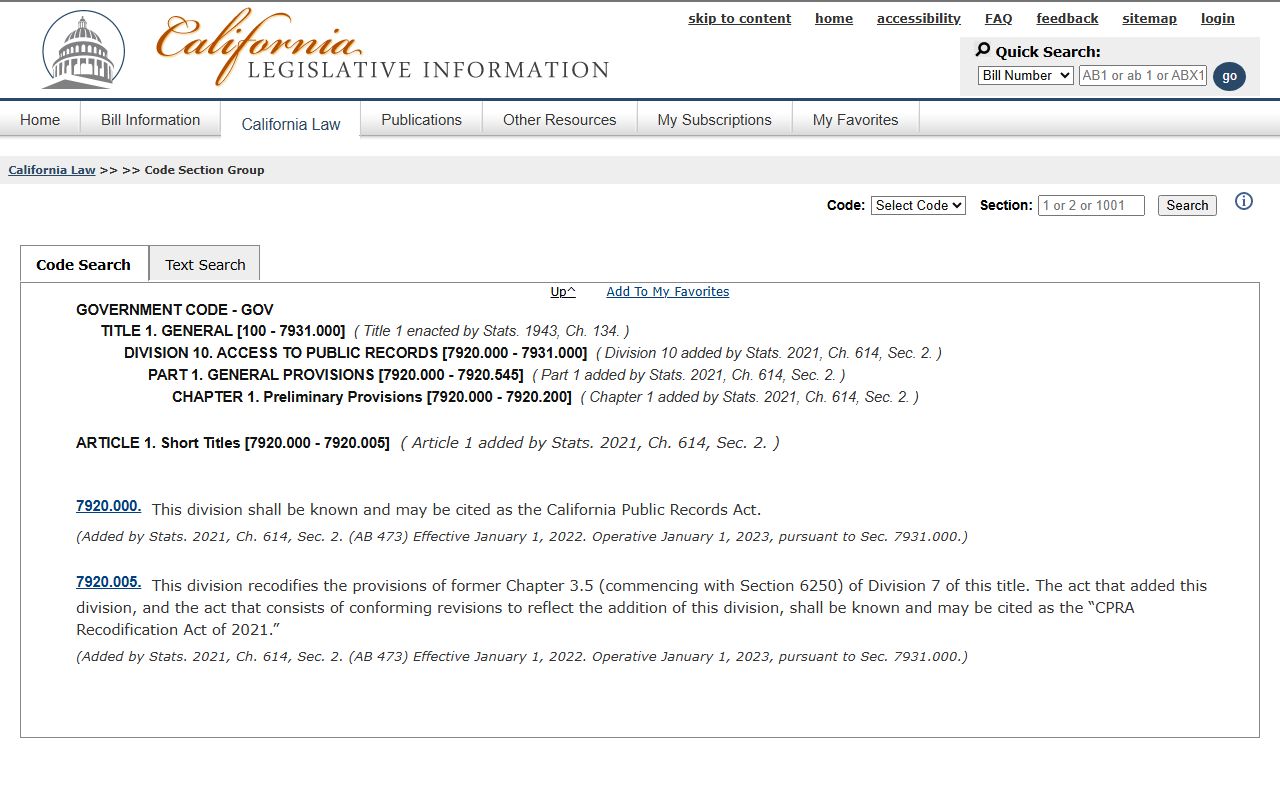
Reading the law makes one thing clear: the default is openness, and the agency has to justify withholding a record, not the other way around.
The Act reaches a wide range of county material. Agendas, contracts, budgets, correspondence, permits, and inspection files are all agency records when a county office holds them. The law works alongside the state Information Practices Act, which protects personal information held by agencies, so an agency balances openness against privacy when a record contains personal data. That balance is why some records come back redacted rather than withheld in full.
Records the County Clerk-Recorder Keeps
Many of the records people want are not court files at all. The Marin County Assessor-Recorder-County Clerk, led by Shelly Scott, keeps a large share of the county's public documents. The office records and maintains documents about property ownership, processes marriage licenses, files fictitious business names, keeps vital records, and preserves historic and current records. The Recorder, the County Clerk, and the Assessor each sit in their own room at the Civic Center.
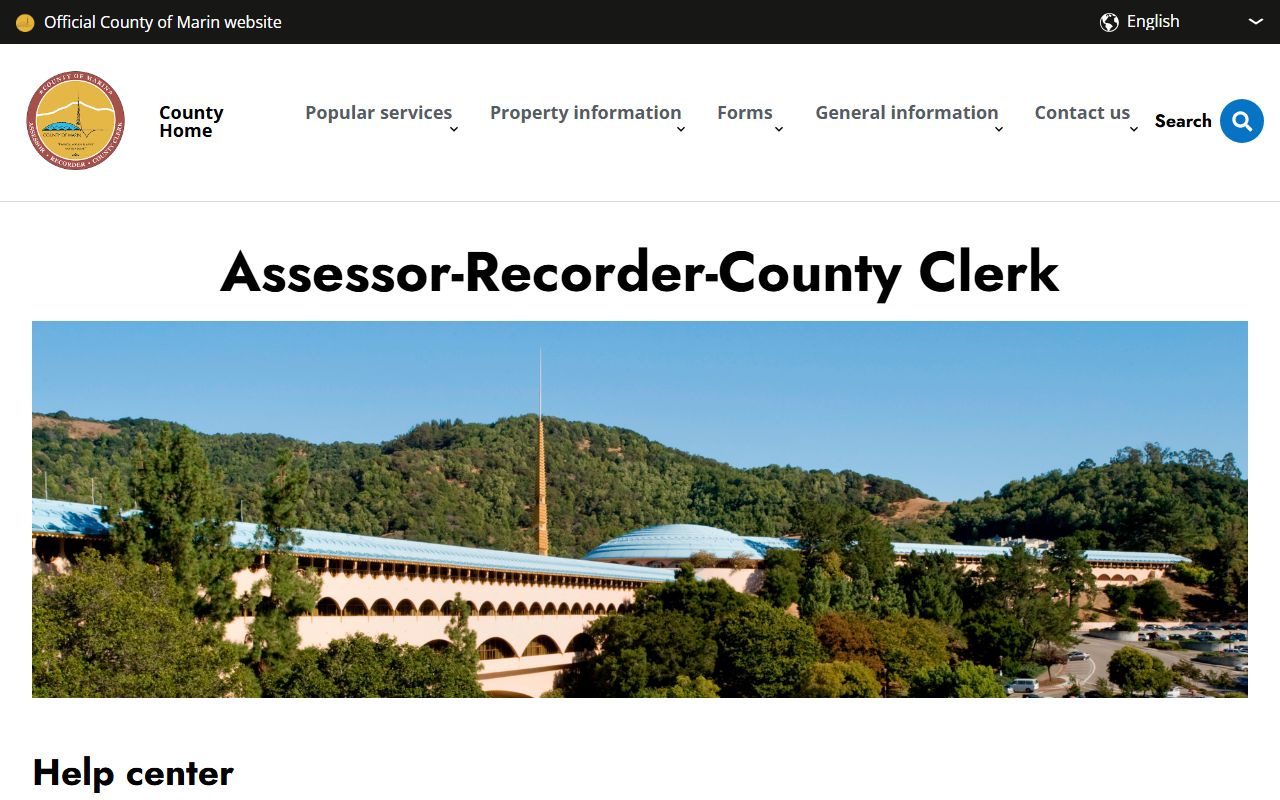
The office homepage links its services and contacts.
Start at the Assessor-Recorder-County Clerk homepage to reach the right division.
The divisions are easy to mix up, so it helps to know who does what. The Assessor values taxable property. The Recorder records and copies official documents like deeds. The County Clerk handles marriage licenses, fictitious business names, and similar filings. The Recorder line is 415-473-6092 and the County Clerk line is 415-473-6772, with office hours running Monday through Friday from 9:00 a.m. to 4:00 p.m. For a full profile of that office and its fees, see the County Clerk-Recorder page.
Searching the Marin County Recorder Index
Recorded documents are searched through the Recorder's official records index. The office keeps a Grantor and Grantee index that covers documents from 1973 to the present. That index is the route to deeds, deeds of trust, liens, and other recorded instruments tied to a property or a person. For older records, the office holds historic documents but the online index has its 1973 start point.
A recorded document is different from a court record. A deed sits with the Recorder. A lawsuit over that property sits with the court. Matching the document to the right office is the first step in any search.
The index is organized by the names on each document, which is why it is called a Grantor and Grantee index. The grantor is the party giving or transferring an interest, and the grantee is the party receiving it. Searching by name turns up the documents tied to a person or a business, while a property search may also use the assessor parcel data the same office maintains.
Vital Records and Business Filings
The Recorder and County Clerk also keep the records that mark major life events. The office holds birth, death, and public marriage records for Marin, and it processes marriage licenses and fictitious business name statements. These are agency records, separate from any court case. One important exception trips people up: a divorce decree is not here. The Recorder directs divorce requests to the Superior Court, because a decree is a court record.
Access to vital records is limited by law. An authorized certified copy of a birth, death, or marriage record goes to the people named on it and a short list of others, while everyone else can get an informational copy that is not valid to establish identity. For marriage records specifically, see the marriage and divorce records page, which covers the license and copy process in detail.
How to File a Marin County Public Records Request
A public records request does not need a special form, but a clear request gets a faster answer. Identify the office that holds the record, describe the record as precisely as you can, and state how you want to receive it. The Recorder recommends its online webstore for copies and accepts a mail copy request form, but it does not take copy requests by email.
- Find the office that keeps the record, such as the Recorder or a county department.
- Describe the record clearly, with a date range or document number if known.
- Choose your format, such as a copy, a certified copy, or inspection.
- Submit through the office's webstore, mail form, or public records portal.
- Pay any copy or certification fee the office charges.
What a Public Records Request Should Include
The clearer the request, the less back-and-forth it takes. While the exact fields vary by office, a complete request generally includes the items below.
| Field | Type | Required | Notes / Format |
|---|---|---|---|
| Requester contact | Text | Yes | Name and a way to reach you with the records |
| Records sought | Text | Yes | Describe the document as precisely as possible |
| Date range or reference | Text / date | Helpful | Document number or book and page narrows the search |
| Format | Selection | Yes | Copy, certified copy, or inspection |
| Payment | Payment | Conditional | Copy and certification fees apply |
Marin County Public Record Fees
Recorder copy and recording fees are set by statute and posted by the office. The figures below cover the common official-record costs. Note that recording a new document carries added state and county fees on top of the base charge.
| Item | Fee |
|---|---|
| Official record first page | $4 |
| Official record each additional page | $2 |
| Certification under seal | $4 per document |
| Basic recording first page | $14 |
| Recording each additional page | $3 |
Recording a document title can also carry a $75 Building Homes and Jobs Act fee and a $10 real estate fraud prosecution fee, with limited exemptions.
Court Records vs Agency Records
This distinction decides where your request goes. Agency records, like a recorded deed or a county department file, fall under the Public Records Act. Court case files do not. They run on Judicial Council rules that define what a court record is, what can be reached online, and what stays at the courthouse. Sending a court-record request to a county agency, or the reverse, only slows things down.
| Agency Record | Court Record | |
|---|---|---|
| Governed by | California Public Records Act | California Rules of Court |
| Examples | Deeds, business filings, agency files | Civil, criminal, family, probate cases |
| Where to ask | Recorder or county department | Superior Court records process |
For the court side, see the Marin County court records page and the Clerk of the Superior Court.
Response Timelines and Limits
The Public Records Act sets expectations for how quickly an agency responds, even though producing copies can take longer for large or complex requests. An agency generally has to tell you within a set period whether it has records that match your request. Some records are exempt, and an agency can withhold those or release a redacted version. If an agency denies a request, it should point to the exemption it is relying on.
Court records follow their own timeline. The Superior Court warns that a records request can take more than six weeks and asks people not to send duplicates or call for status, since both slow the queue. Recorder copies, by contrast, are often quick through the online webstore, since those documents are already on file and indexed. The takeaway is that timing depends as much on the office and the record type as on the request itself. A clear, specific request with a document number or a date range almost always comes back faster than a broad one, so the work you put into the request up front pays off in the wait.
Note: The Public Records Act covers county agency records, while court case files follow separate court rules, so match the request to the right office.