
What Is a Court Docket in Marin County
A docket is the running list of everything that happens in a case. In California the court calls it the register of actions. It shows the parties, their attorneys, the documents filed, the appearance dates, and the actions a judge took at each hearing or settlement event. The docket is a map of the case, not the case file itself.
That difference matters. The docket tells you a motion was filed and when the judge ruled. It does not hand you the motion. For the actual document, you go to the full file. A Marin County court docket gives the timeline, while the court record holds the paper.
Each division feeds its own register of actions. A civil docket tracks complaints, answers, motions, and judgments. A criminal docket follows the arraignment, the plea, the hearings, and the sentence. Family and probate dockets log petitions, orders, and review dates. The format stays the same across divisions even though the events differ. That consistency is what lets a person scan a long case in a few minutes.
How to Find Marin County Dockets Online
The Superior Court ePortal is the official source for Marin dockets. After you create a free public account, the case search shows the register of actions and the events for a case. The calendar search works the other way, letting you filter by date, case type, and courtroom to see what is coming up. Minute records, the court's short notes from a hearing, sit on the Events tab for matters after June 20, 2023, and on the Documents tab for older ones.
- Open the ePortal and sign in to your public account.
- Pick case search for one case or calendar search for a date.
- Enter a party name, a case number, or a courtroom filter.
- Open the case and read the register of actions entries.
Access level shapes what the docket shows. A public account sees the event list, the parties, and the document descriptions. A party or attorney with verified access also opens the document PDFs and any minute orders tied to an event. If the docket lists a minute record but you cannot open it, that is the access limit at work, not a missing file. The same case viewed at the Room 113 public kiosk may show more than the remote view.
Sample Marin County Docket Entry
Each line in a register of actions follows the same shape. It carries a date, the type of event, the party who acted, and a pointer to the document. For the public, the pointer shows the document description but does not open the PDF. The table below breaks down a typical entry.
| Field | What It Shows |
|---|---|
| Entry Date | The day the filing or hearing was recorded |
| Event Type | Motion, order, hearing, judgment, or notice |
| Party Filing | Which side filed the document or appeared |
| Document Link | Description and filing party; PDF for verified users only |
| Disposition | The ruling or result tied to that event |
Courts That Publish Dockets in Marin County
Because California unified its trial courts, one court holds nearly all local dockets. The Superior Court of California, County of Marin publishes case and calendar data for its divisions through the ePortal. Federal cases sit elsewhere, and they use their own systems.
- Superior Court of Marin - civil, criminal, family, probate, traffic, and small claims dockets through the ePortal.
- U.S. District Court, Northern District of California - federal civil and criminal dockets for Marin parties.
- U.S. Court of Appeals for the Ninth Circuit - appeals from federal cases in the district.
Federal Court Dockets for Marin Cases
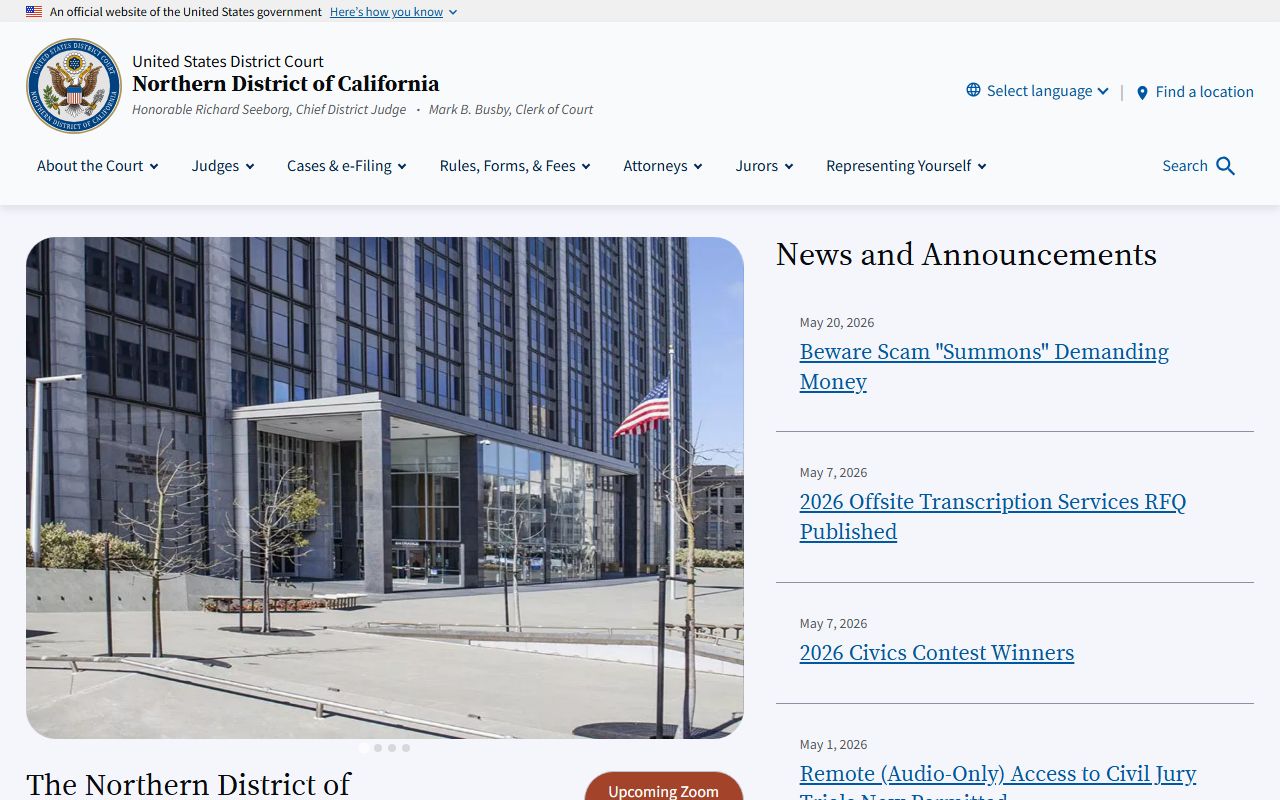
Some matters involving Marin residents are federal, not state. Federal crimes, civil rights claims, and federal-question lawsuits go to the United States District Court for the Northern District of California. There is no federal courthouse inside Marin, so cases are heard in nearby divisions such as San Francisco or Oakland.
The district court posts its general information and local rules online.
The trial-level federal court site is the Northern District of California homepage.
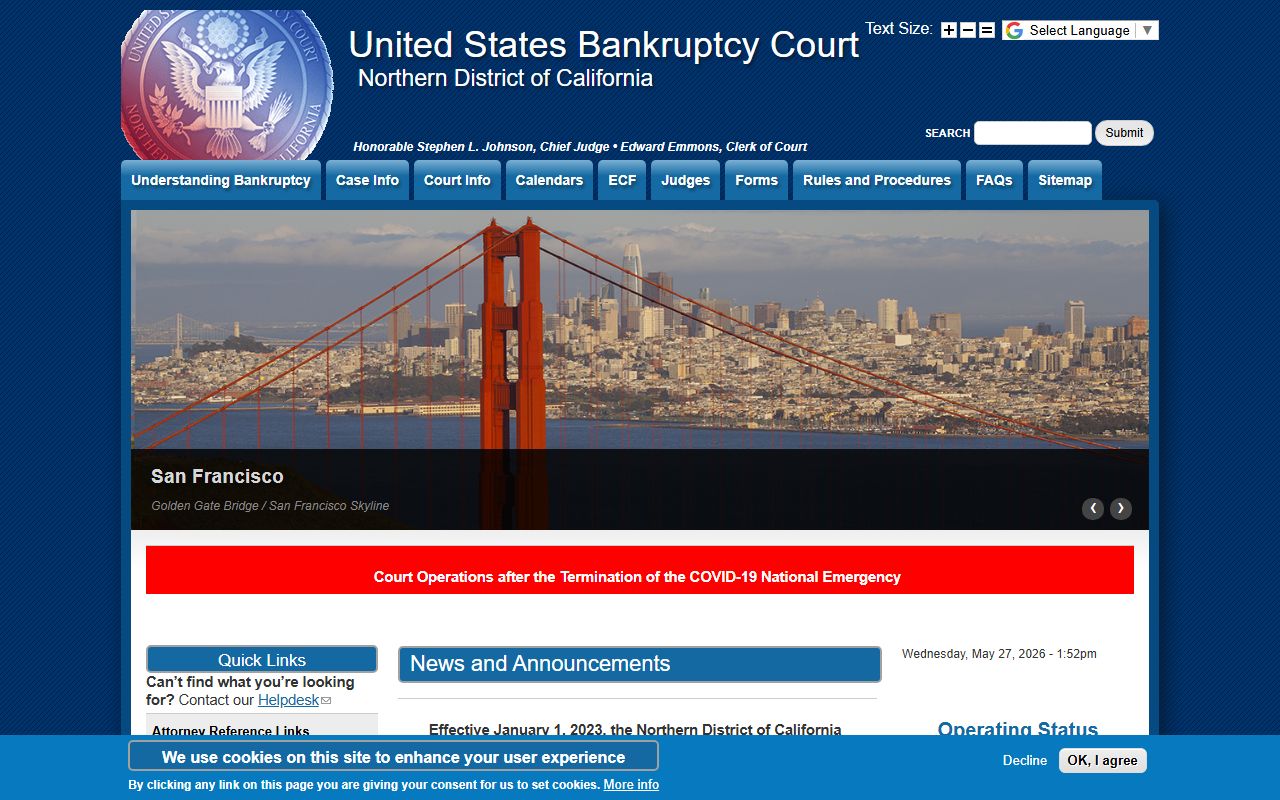
Bankruptcy cases follow a separate track in their own court.
Those filings appear on the Northern District bankruptcy court site.
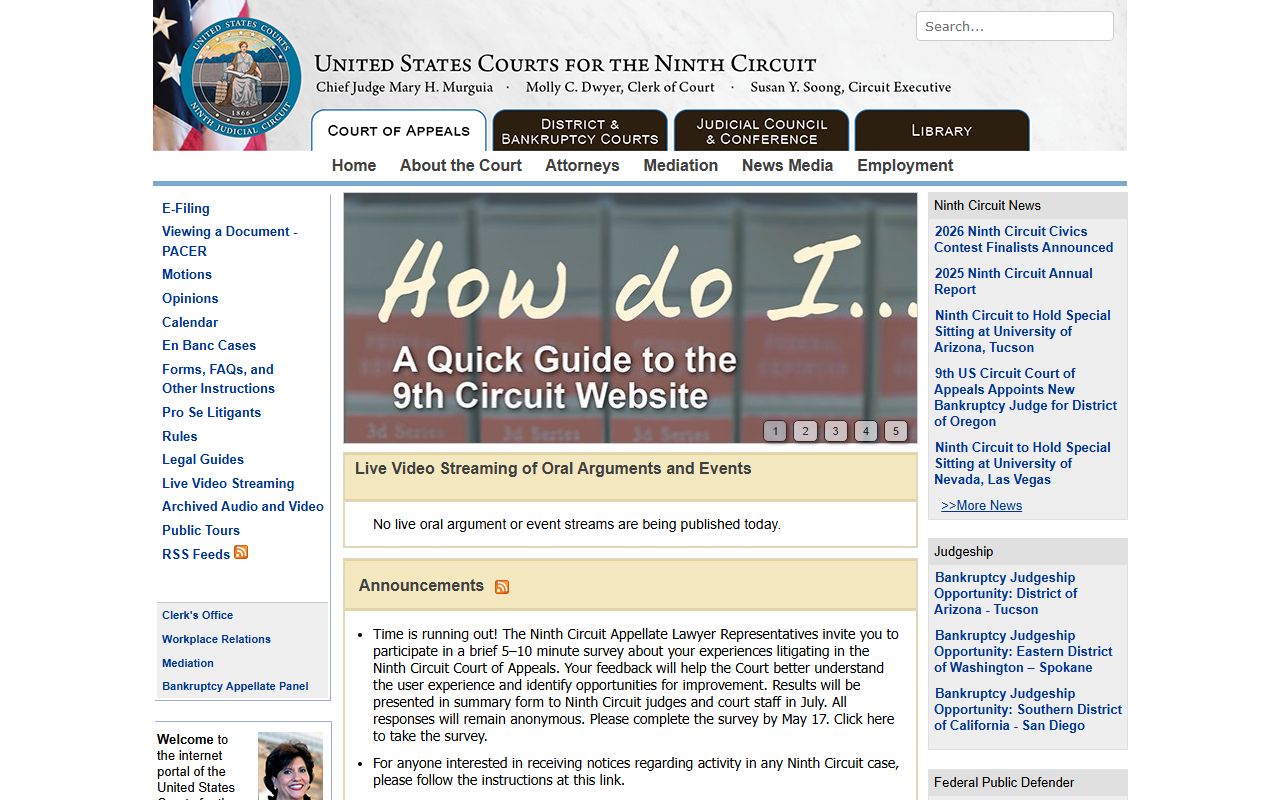
Appeals from these federal cases move up one level.
They are docketed at the U.S. Court of Appeals for the Ninth Circuit.
San Quentin, the state prison in Marin, is run by the state, so it has nothing to do with these federal dockets.
Searching Federal Dockets on PACER
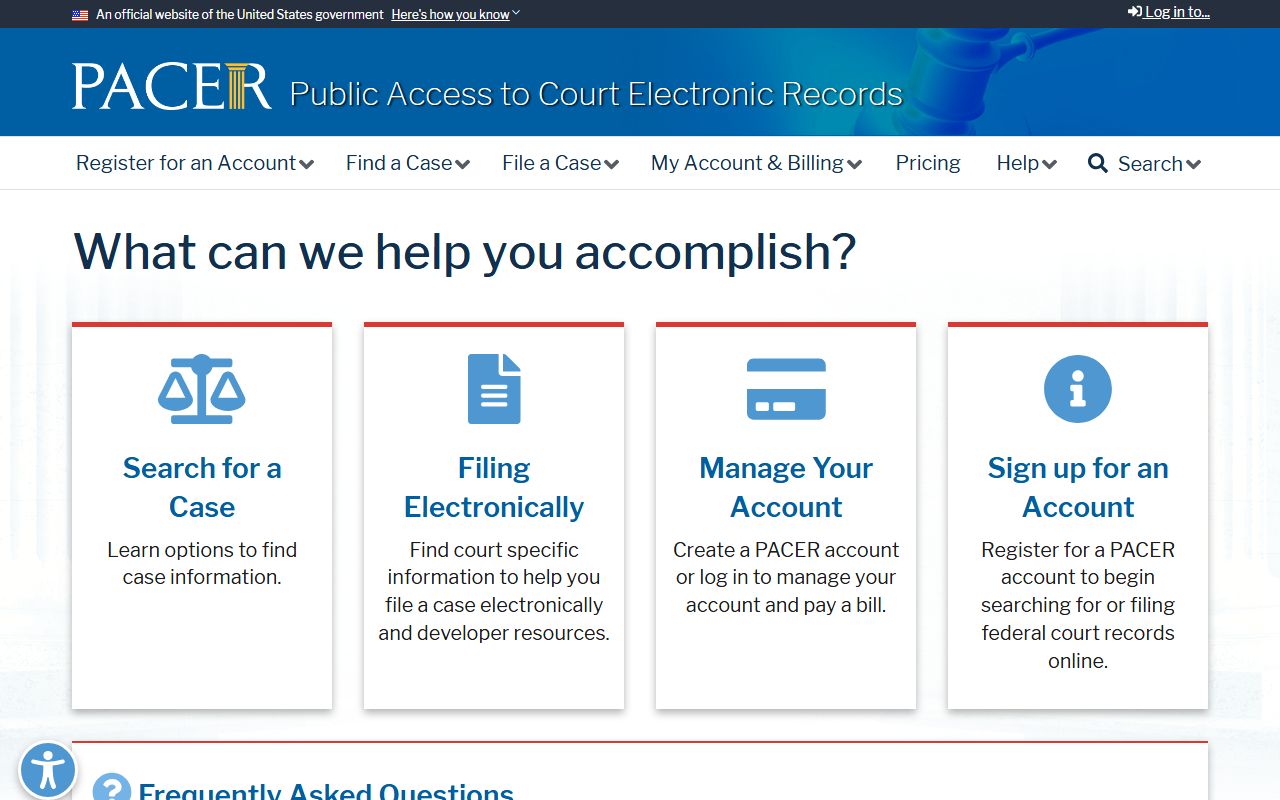
Federal dockets are searched through PACER. It is the official public access system for district, bankruptcy, and appellate courts. PACER asks for registration and charges per page, with fee waivers and a quarterly free threshold. Attorneys file through CM/ECF, while the public mostly reads documents through PACER.
The registration and access portal is the PACER site.
For many opinions and a share of dockets, a free option exists.
CourtListener mirrors RECAP documents and federal opinions, so the CourtListener database can fill gaps, though it is not the official docket of record.
Treat CourtListener as a research aid and confirm anything important against PACER, since coverage there can be partial and a few days behind the official docket.
Hearing and Calendar Information in Marin County
The calendar search is the fastest way to see what is scheduled. It pulls the court's daily and future calendars and lets you filter by date, case type, and courtroom. That is useful when you know a hearing is coming but not the case number, or when you want to confirm a department before you drive to the Civic Center. The calendar reflects assigned courtrooms, so a family matter and a criminal matter show up under different judges.
Hearings move. A case can be continued, reassigned, or taken off calendar, and the docket records each change. Always check the calendar close to the hearing date rather than relying on an entry from weeks earlier. If a matter is confidential, it may not appear on the public calendar at all.
How to Read a Marin County Court Docket
Dockets use shorthand to save space. Knowing a few labels makes the entries readable. The party who starts a case is the plaintiff or petitioner. The party who responds is the defendant or respondent. In a criminal docket, the plaintiff is the People of the State of California, with the accused listed as the defendant.
Watch the event words. A motion is a request for an order. An order is the judge's ruling. A disposition is the outcome of a charge or a claim. A continuance pushes a hearing to a later date. An entry that reads dismissed ends that count or claim, and the docket will note whether it can be refiled. The biggest mistake readers make is treating a filed charge as a conviction. A charge is only an accusation until a plea or a verdict appears in the record.
Docket vs Full Case Record
People often ask for a docket when they really need the file, or the other way around. The two serve different jobs. A docket lists the events. A full case record holds the documents, exhibits, and signed orders. The comparison below shows where each one fits.
| Docket | Full Case Record | |
|---|---|---|
| Format | List of dated entries | Full documents and exhibits |
| Access | Case data shown to public online | May need a kiosk visit or a copy fee |
| Use | Track case progress and dates | Legal review and evidence |
For the documents behind a docket entry, see the Marin County court records page and its request steps.
Sealed Entries and Remote Access Limits
Not every entry is visible. When a judge seals part of a case, the docket may hide the document or the entry. Sealing follows a court order under the state rules, and a party or member of the public can ask to unseal. The procedure is strict for a reason, since sealing overrides the usual presumption that courts stay open.
The procedure for filing and challenging sealed records is set in California Rule of Court 2.551.
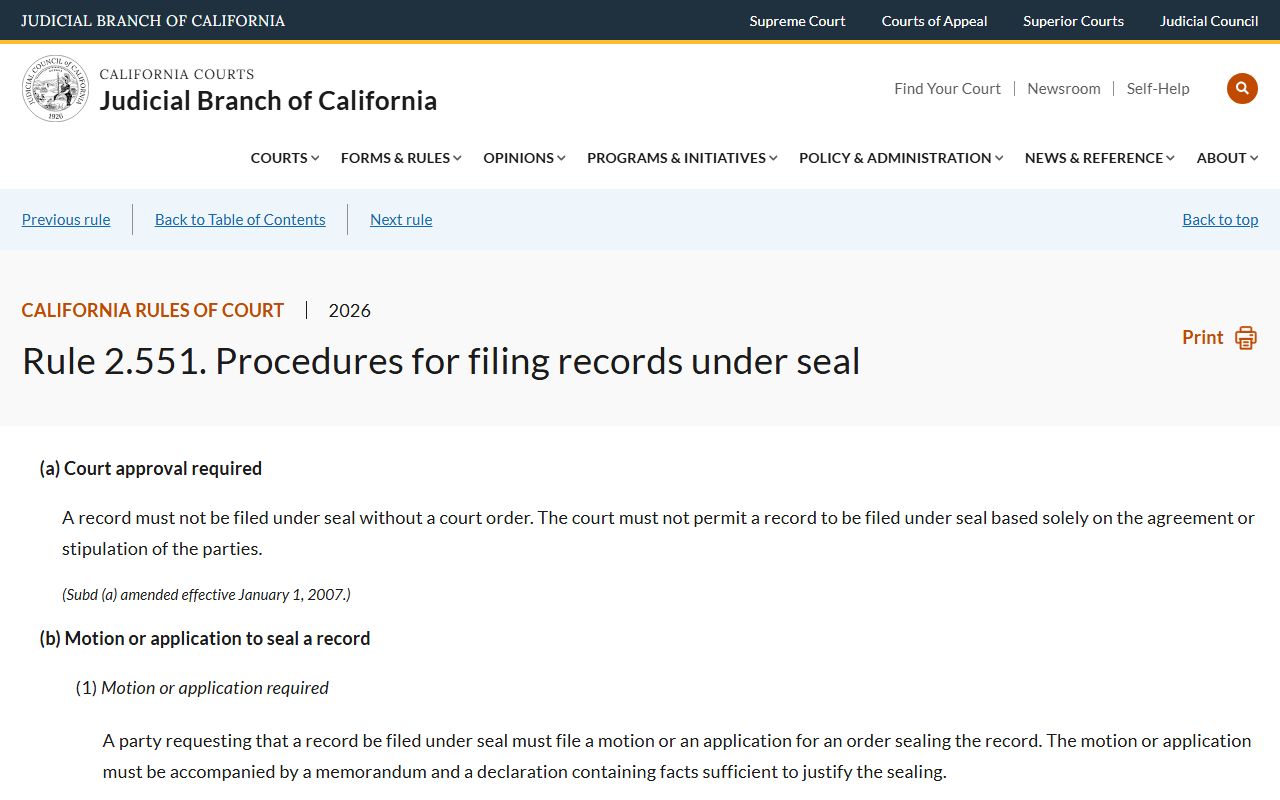
Remote public access is also narrower than courthouse access, so a docket viewed at the Room 113 kiosk can show more than the same case from home. To unseal a record, a person files a motion or application and gives notice to the other side, and the judge weighs whether the seal still meets the legal standard.
Note: A blank or hidden docket line can mean the entry is sealed by court order, not that the case is missing from the system.