
What Marin County Probate Records Cover
The Probate Division has broad jurisdiction. It handles decedent estates and trusts, guardianships of minors, and conservatorships of adults who cannot care for themselves. That includes limited conservatorships, Lanterman-Petris-Short conservatorships for serious mental illness, commitments of developmentally disabled people, and proceedings to establish the fact of a birth, death, or marriage. Judge James Chou is assigned to Juvenile and Probate in Courtroom C.
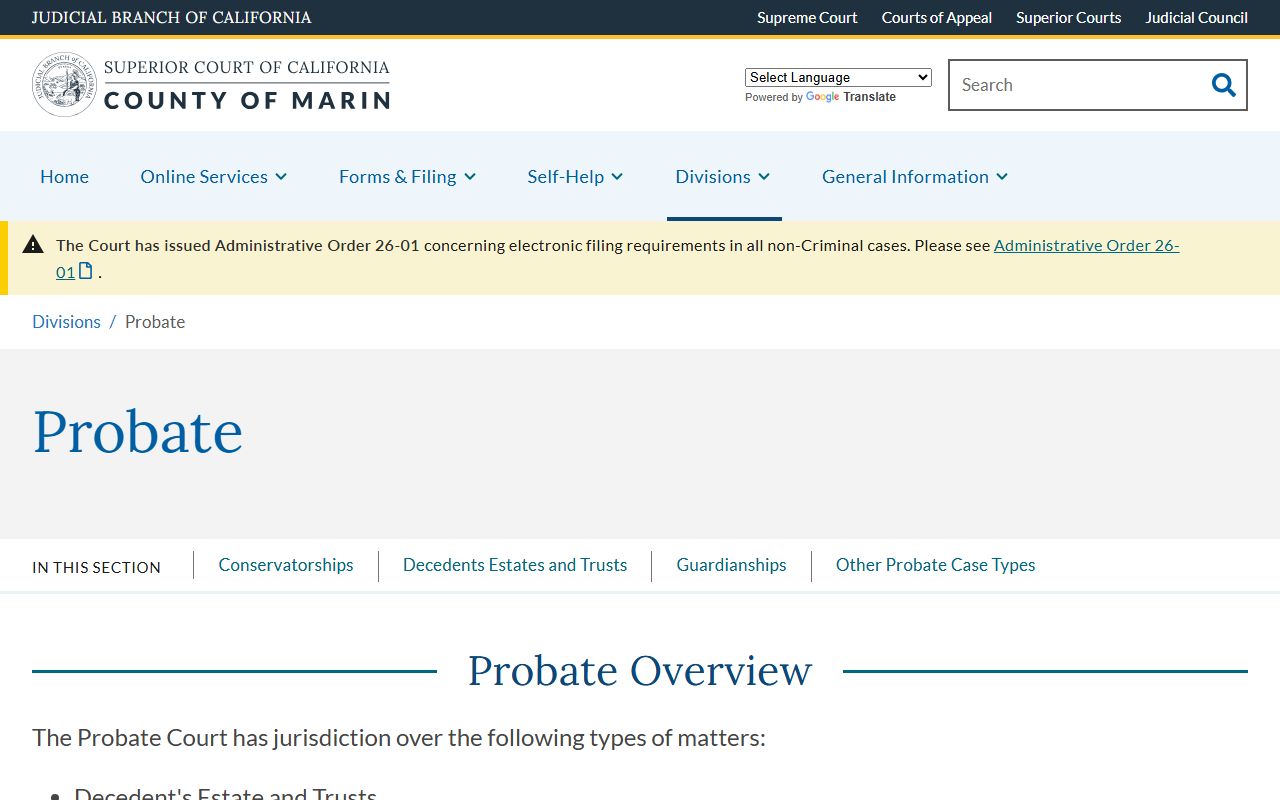
The division's official page lists the case types and the filing rules.
The court describes its scope on the Probate Division page.
Because probate touches money, property, and vulnerable people, the court adds extra review steps that other divisions do not use.
- Testator
- The person who made a will.
- Executor
- The person named in a will to carry out its terms.
- Intestate
- Dying without a valid will, so state law decides who inherits.
- Guardianship
- A court appointment to care for a minor or a minor's estate.
- Conservatorship
- A court appointment to care for an adult or manage their affairs.
How to Search Marin County Probate Records
Probate cases are searched the same way as other Marin court files, through the Superior Court ePortal. After you create a public account, the case search shows the parties, the events, and the documents filed in an estate or conservatorship matter. Public access shows the case data, while full documents may need the Room 113 public kiosk or a records request. If staff have to search for an estate by name, the court charges an estate search fee.
Some probate material is more sensitive than a standard civil file. Conservatorship cases can include medical and mental health detail and investigator reports, which the court restricts even when the case itself is on the docket.
A probate file builds up a lot of documents over time. An estate case can include the petition, the will, letters that authorize the representative, an inventory of assets, accountings, creditor notices, and the final order of distribution. The register of actions lists each of these as they are filed, so the docket is a good way to see where a case stands before you request any single document.
Lodging a Will in Marin County
California sets a hard deadline after a death. The person who holds the original will must lodge it with the Court within 30 calendar days of the date of death. Lodging means delivering the will to the court for safekeeping, and it is required whether or not a probate case is opened. Missing the deadline can create problems for the estate later, and the holder of the will can face liability for the delay.
Lodging a will is not the same as starting probate. It simply puts the original document on file with the court. A separate petition opens the estate case if one is needed.
Probate Examiners and Court Investigators
Two roles make probate different from a regular civil case. A Probate Examiner, or research attorney, reviews the documents in estate, conservatorship, and guardianship matters for procedural correctness before the hearing. The examiner flags defects so they can be fixed, but cannot give legal advice or an advisory opinion. Probate Court Investigators work the conservatorship and guardianship cases.
For conservatorships, state law requires investigators to assess the proposed conservatee's living situation, health, and finances, visit regularly, review medical records, and report to the court. For guardianships, investigators review the proposed guardian and report on how the environment affects the child. The investigators' line is 415-444-7090.
Marin County Probate Record Fees
Probate filing fees follow the statewide civil fee schedule, while copy and search fees match the rest of the court. The estate search fee is set by Government Code 70661. The figures below cover the common record costs rather than the full filing schedule.
| Item | Fee |
|---|---|
| Estate search per case | $15 |
| Plain copy per page | $0.50 |
| Certification per document | $40 |
| File or name search per case | $15 |
Note: filing fees for opening an estate or conservatorship are set by the statewide civil fee schedule, so confirm the current amount with the court before you file.
How Probate Works in Marin County
An estate moves through the court in a set order. The steps below show the path for a typical decedent estate with a will, though small estates and trust administration can follow shorter routes.
- Lodge the original will within 30 days of the death.
- Decide whether full probate, a small-estate process, or a trust route fits.
- Prepare the Judicial Council and local forms and file in Room 113.
- Get a hearing date and give the required notice or publication.
- The Probate Examiner reviews the papers before the hearing.
- The court hears the petition, often in Courtroom C.
- If granted, letters issue and the representative settles the estate.
Probate ex parte matters have their own timing. They must be delivered no later than 10:00 a.m. two court days before the hearing, and they are heard on Thursday mornings in Courtroom C. Documents received in the clerk's office after 3:30 p.m. are time-stamped with the current date but processed the next court business day, so the filing date is the stamped date. That timing matters when a deadline like the 30-day will-lodging rule is close.
Guardianship and Conservatorship Records
Guardianship and conservatorship are the protective side of probate, and people often confuse them. A guardianship protects a minor or a minor's property. A conservatorship protects an adult who cannot manage their own care or finances. The court treats both with extra care because they take rights away from one person and give them to another.
| Guardianship | Conservatorship | |
|---|---|---|
| Who it protects | A minor or a minor's estate | An adult who cannot manage care or money |
| Investigator role | Reviews the proposed guardian and the child's environment | Assesses living situation, health, and finances |
| Record access | Case data public; some detail restricted | Medical and mental health detail restricted |
These cases can overlap with protective orders. The Superior Court's family and restraining order processes sit alongside probate in the unified family court space.
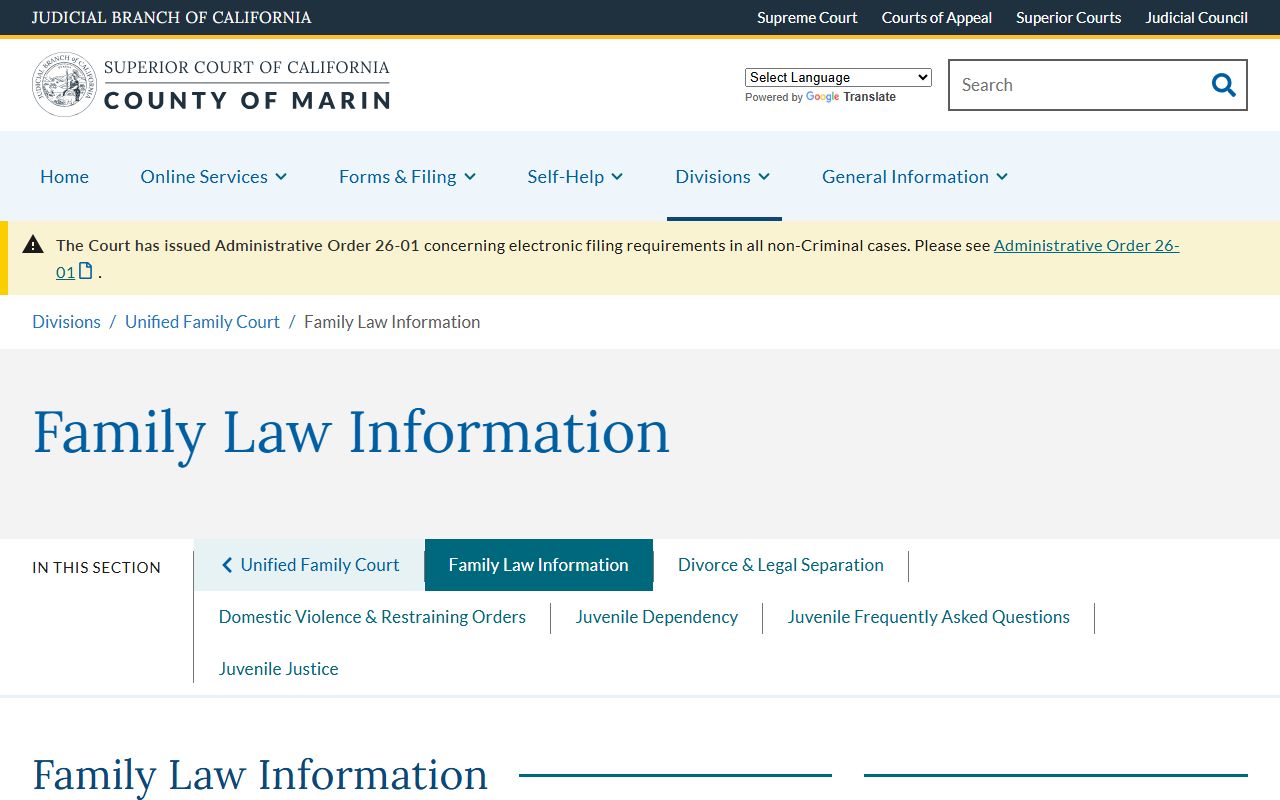
The court's family law page explains the related family matters.
See the Family Law information page for matters that touch the same families.
Protective orders are handled through a separate restraining order process.
Those orders are covered on the court's restraining orders page.
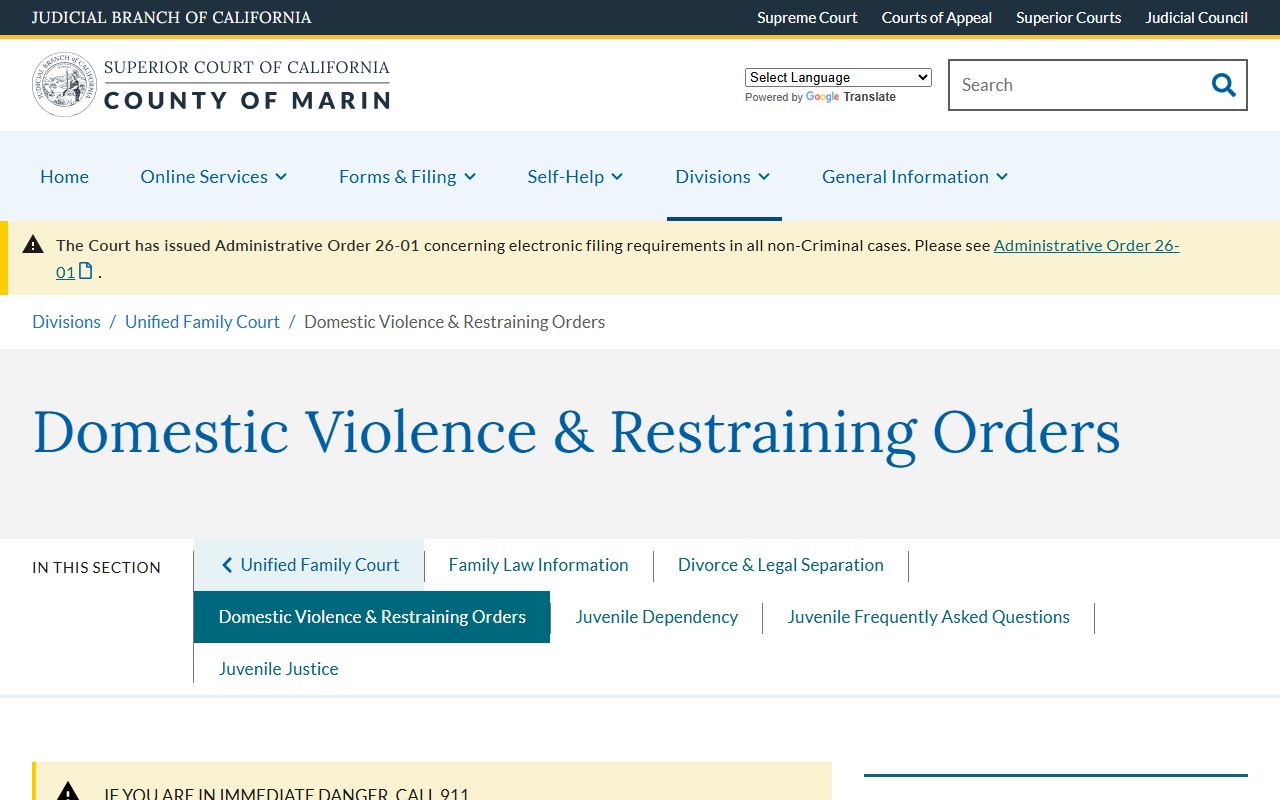
Elder and dependent abuse restraining orders, in particular, can run next to a conservatorship for the same adult.
Restricted and Sealed Probate Records
Not all of a probate file is open. Conservatorship cases carry medical and mental health information, and investigator reports can include private detail, so the court restricts those parts. A judge can also seal portions of a case under the state rules, which set a high standard before a court closes a record to the public.
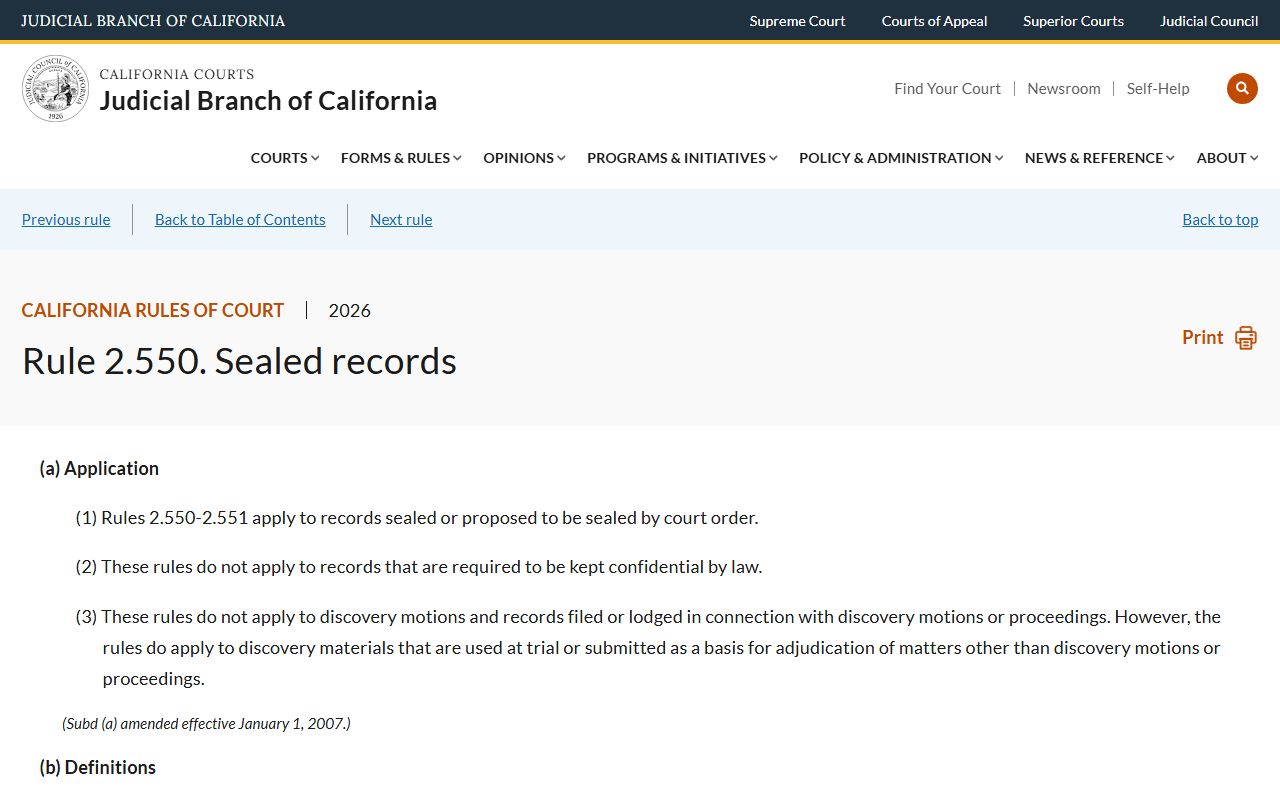
The sealing standard is set out in the state rule.
See California Rule of Court 2.550 for when a court may seal a record.
For the parts that stay open, the case search and the records request both work, the same as any court file. A party who needs a restricted part of the file usually has to show standing and follow the court's process, since the protection exists for the conservatee or the child rather than for general privacy.
Probate Within the California Court System
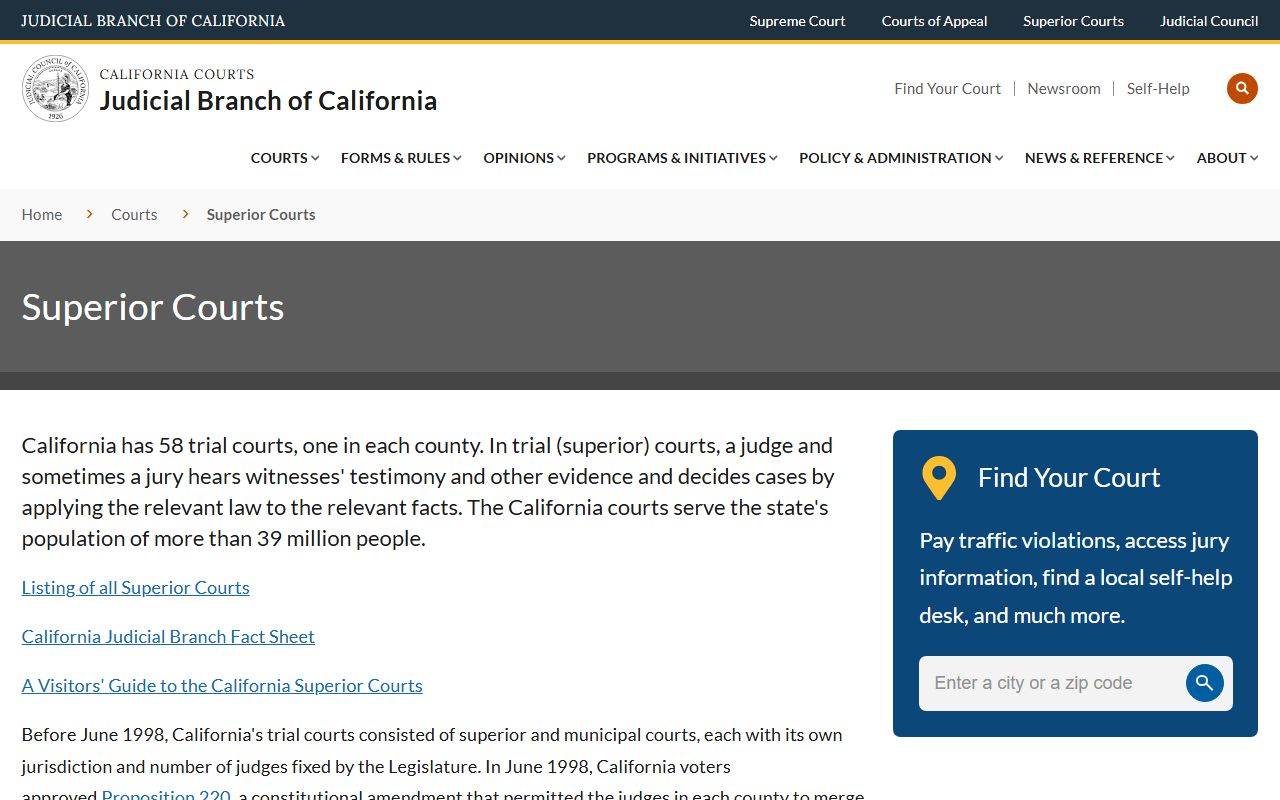
Probate is not a separate court in California. It is a division of the Superior Court, the single trial court in each county. After the 1998 unification, there are no separate probate or surrogate courts here, so a probate matter and a criminal matter are heard in the same court under different judges.
The state explains how the superior courts fit the larger system.
The Judicial Branch describes the trial courts on its superior courts page.
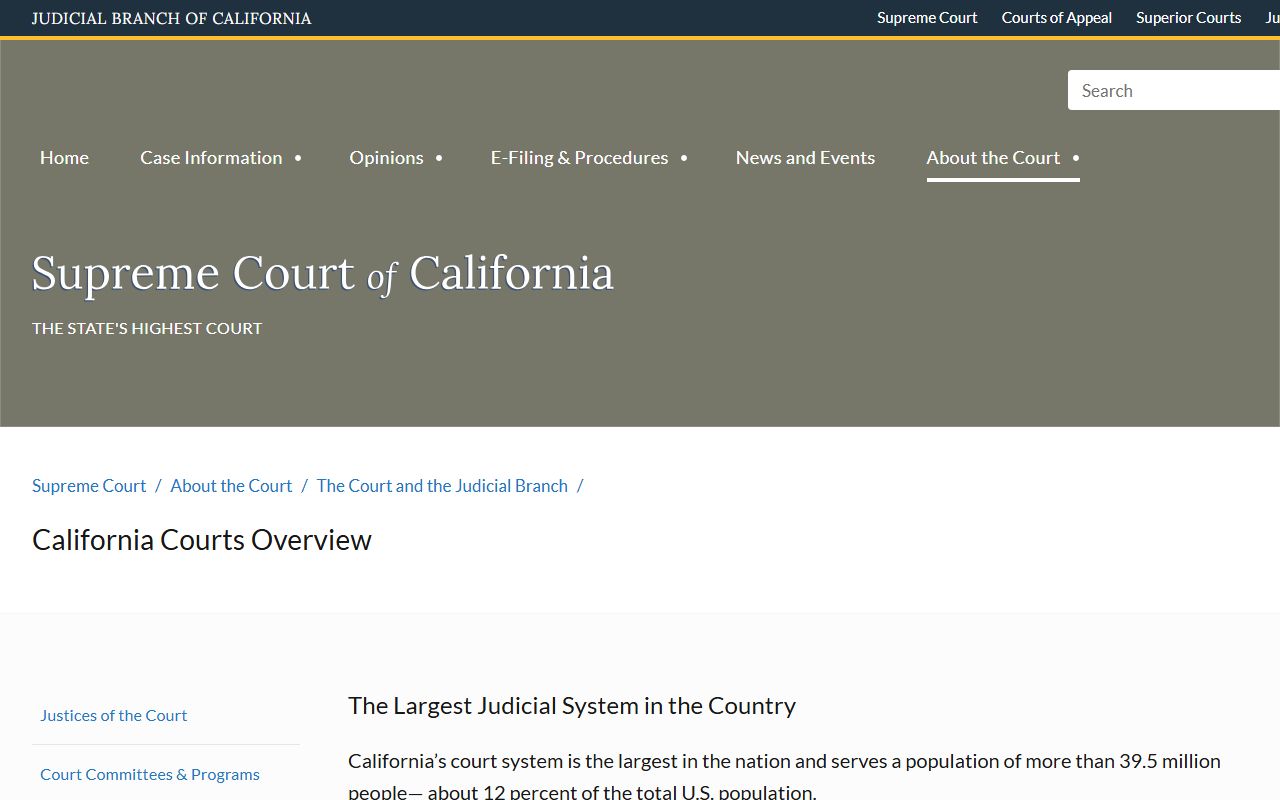
The Supreme Court of California offers a wider overview of the court structure.
That overview is on the California courts overview page.
Knowing that probate is a division, not a building of its own, explains why the filing window and the records process are shared with other case types.
Probate Division, Marin Superior Court
3501 Civic Center Drive, Room 113 (filing)
San Rafael, CA 94903
415-444-7213 (Courtroom C)
Investigators: 415-444-7090